Contributors:
Amol Ghemud Published: August 14, 2018
In This Article
Share On:
Is your startup in search of new avenues for growth and expansion? Then you’ll want to read the blog further on which types of growth hack ideas growth hack techniques as popularly known will be needed to achieve this growth.
Each technique mentioned in the article serves a different purpose and to achieve this purpose, your business will need the right tools in place.
From growth hacking techniques such as customer feedback to user testing and from email marketing to lead generation, there’s no doubt digital marketers have a lot on their plates when it comes to prioritizing and selecting the right approach, including which tools aid in that approach. So we’ve made it easier for you… In this overview, we will analyze the different growth hacking techniques and tools that you can apply to achieve growth.
Key growth hacks for startups are not reserved only for professionals and companies belonging to a certain sector. Any startup can use the skills mentioned and anyone who has the right skills, tool stack and drive can build upon these tactics to increase a product’s reach and subscribers.
Otherwise known as growth hacking marketing, Sean Ellis, CEO and Founder of GrowthHackers, first came up with the term growth hacker. According to him, “A growth hacker is a person whose true north is growth.”
Want to talk to an experienced growth hacker and pick his brains?
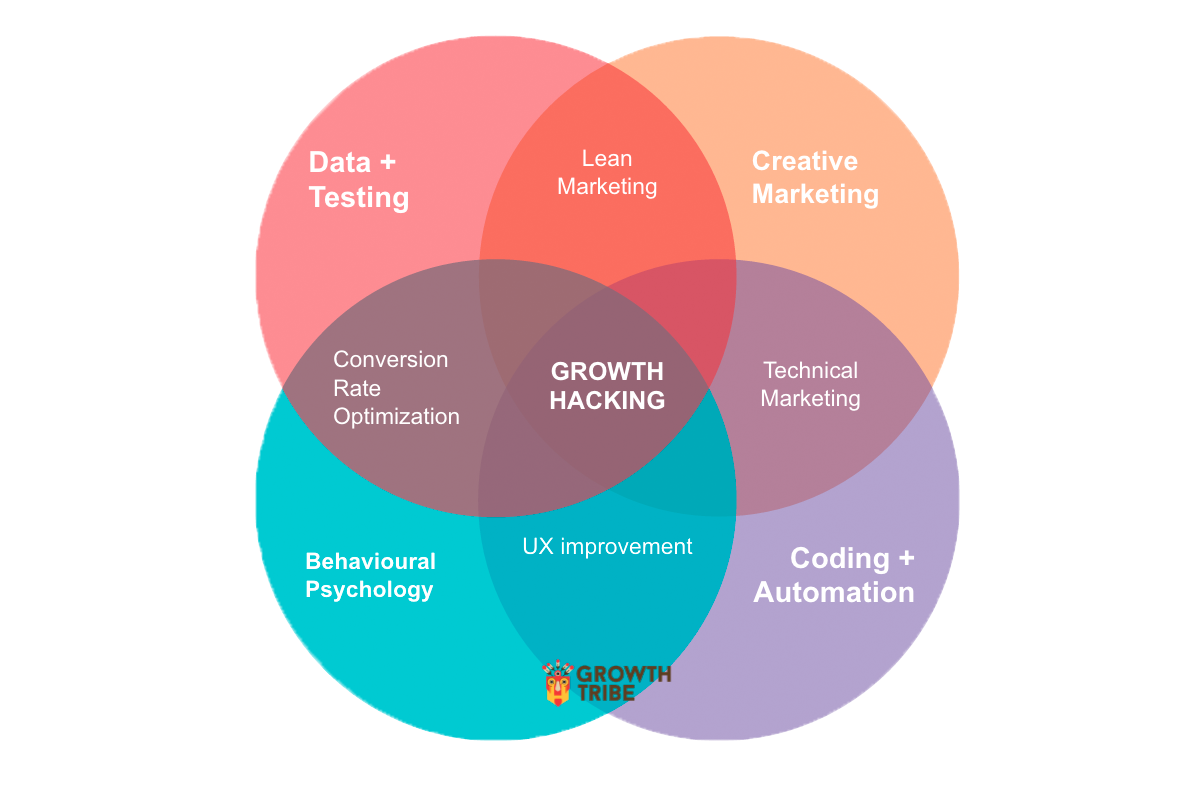
Everything a growth hacker does is aimed towards a uniform, single goal –growth. A growth hacker uses all initiatives, tools, and techniques to achieve consumer growth. This professional needs to be both a marketer and an engineer who seeks out the best marketing ideas through testing and analyzing results. The end game for any growth hacker is finding scalable strategies to bring in more users. A growth hacker ignores everything else to focus on infiltrating the market through product innovations, new distribution channels, and technology-based features. Growth hacking tricks for startup need to be precise, concise and achievable in nature.
We’ve mentioned 6growth hacking techniques in particular:
Customer Insight and Feedback
Traffic Generation
User Testing
Lead Generation
Email Marketing
Inbound Marketing
Consumer Insight and Feedback
Having a better understanding of your customers (on a deeper level than any web analytics tool provides) is pivotal to having a successful digital business strategy. In other words, knowing what your customers want, how they arrive at their decisions online and how they are interacting with your brand can shape this strategy tremendously – so how do you access these insights?
These insights can be extracted in two different ways depending on how ‘in-depth’ you want to go. The first growth hack technique is the customer feedback. There are several different customer feedback tools on the market that collect data from your customers, whether that’s via online feedback forms, surveys, reviews, etc. The feedback is gathered directly from your customer base and reflects their opinion about your brand and website.
Some examples of customer feedback tools include Mopinion, PollDaddy and WebEngage. Source: Mopinion Feedback Analytics software
Alternatively, you can focus on another growth hacking technique: generic consumer insights. Tools in this area are often geared towards the e-commerce industry and collect insights from the perspective of an entire market. They are focused on insights collected from metadata level, such as how consumers search online, their purchase behaviour, device usage, etc. A good example of this is Consumer Barometer.
Traffic Generation
Traffic Generation is all about maximizing the engagement and relationships by inserting yourself in relevant conversations with your customers and sharing content amongst potential customers/visitors. This is a very useful growth hack idea and is very critical to the growth of your company, tools that use this growth hacking technique help businesses establish a strong online presence.
When the question of successful growth hacking techniques for startups is asked, generating traffic with consumer engagement pops up. They also provide insight into how your competitors are performing in regards to incoming traffic and which parts of your website need optimizing to achieve higher traffic levels. Source: Colibri.io
Online communities, in particular, are a powerful source of traffic and can significantly aid in facilitating online engagement. Also the members of a community are encouraged to interact within the community and can do things like vote on an idea or provide a suggestion. Alternatively, online communities also provide a lot of insight from a customer service perspective. These communities provide a usable platform for members to indicate that they have encountered a problem on the website, which may be a problem shared by other users. An example of this is Colibri.
In addition to online communities, there are many other ways of generating traffic. Some of the growth hack ideas are mentioned here. Users can implement spy tools which allow them to research their competitors and gain insights into which traffic sources, text ads or banner ads they are using – e.g. MixRank. Alternatively, there are tools more geared towards content promotion such as PayWithATweet that allow users to access your content only if they’ve tweeted or posted about it.
User Testing
Another important growth hacking trick for startups is user Testing techniques. It is also known as user experience (UX) techniques, are very beneficial in terms of boosting user interaction. Variety of tools are available within this category that will help to achieve improved website usability as well as provide you with insight into how visitors experience a website or mobile app. These tools include heatmapping, A/B testing, session recording, event-tracking and design & wireframing tools. Source: Clicktale
Heatmapping and session recording tools, for example, shows how your visitors are interacting with your website based on factors such as clicks, scrolls and mouse movement. To use this growth hacking technique, tools such as Hotjar and Clicktale can be applied.
A/B Testing, on the other hand, is focused more so on testing different versions of websites and/or landing pages. Examples of these tools include Visual Website Optimizer (VWO) and Optimizely.
Lead Generation
One of the best growth hacks is growing your customer base, and for obvious reasons, an important goal if you want to achieve growth. Which is why many growth hackers choose to use various lead generation techniques. Tools that use this type of growth hack techniques are intended to help businesses improve in areas that will promote growth such as Search Engine Optimisation (SEO), Conversion Rate Optimisation (CRO) content visibility and of course, customer acquisition. As you might’ve guessed, this can cover a wide range of tools.
Lead gathering techniques are among the most popular amid growth hacks for startups who are looking to build up a list of prospects. This growth hacking technique is demonstrated using tools such as SalesForce, LeadCrunch and Lead Genius. Alternatively, in terms of SEO, tools such as Google Keyword Planner are also very helpful in making sure you score high in keyword rankings within digital content.
Email Marketing
Once the leads are gathered, you’ll need a way of ‘reaching out’ to these prospects. The best growth hacks usually used in this are to do with email marketing. A very effective and long withstanding growth hacking technique, email marketing tools are a great way of targeting both existing and potential customers with relevant content (such as blogs, newsletters, updates, etc).
Email marketing is still considered the most targeted and valuable channel for contacting potential customers. And what’s interesting about this field is that many marketers just kind of ‘stumble’ into it, which makes choosing the right tool all the more essential. Some of the well-known growth hack examples for email marketing are toolsinclude, MailChimp, CampaignMonitor and AWeber.
Inbound Marketing
Last but not least we have a growth hacking trick for startup which was the best growth hacks in past and continues to be the best growth hacking techniques in 2018; inbound marketing. A lot of tools that are focused on bringing in new customers are available for this growth hacking technique. It is usually done by way of relevant content creation and sharing. Creating content that entices your readers can help you quickly build up trust among them. Without having to fight for their attention (bonus!). And in addition to trust, these tools also help build awareness of your brand and what it has to offer. This includes introducing new solutions to your readers’ problems.
Many inbound marketing tools have multiple capabilities. Take HubSpot, for example. This tool is not only tracks and measures blogging activities, social media marketing and email marketing. But it can also help you create landing pages and offers a content management system that assists you in optimizing your content. There are also tools that serve as content discovery platforms, such as Outbrain. With these tools, companies can increase their reach in terms of readers – a great growth hacking technique.
To skyrocket your inbound marketing results, diversify your inbound marketing tactics by using more than one marketing channel.
Conclusion
The growth hacking strategies you decide to use largely depend on. The type of business you have, your current situation, and what you intend to achieve.
It’s worth noting that growth hacking only works when you invest your time and resources on the right strategy. For optimal results, try out different growth hacking techniques to see what gives you the best ROI. Then put all your efforts into what works and abandon what doesn’t.
For Curious Minds
The defining principle of a growth hacker is that their true north is growth, a concept introduced by Sean Ellis, CEO of GrowthHackers. This means every action, tool, and initiative is exclusively dedicated to achieving consumer growth, making it a powerful mindset for startups that need to scale efficiently. A growth hacker operates as a hybrid marketer and engineer, relentlessly testing and analyzing ideas to find scalable strategies for user acquisition.
This single-minded focus is critical because it forces a startup to prioritize ruthlessly. Instead of spreading resources across broad marketing activities, a growth hacker concentrates on high-impact areas. Key responsibilities include:
Identifying Opportunities: Seeking out the most effective marketing ideas through rigorous testing and data analysis.
Product Innovation: Focusing on infiltrating the market through technology-based features and product improvements that naturally attract users.
Channel Exploration: Discovering and optimizing new distribution channels to bring in more customers.
By ignoring all distractions, this approach ensures that every effort directly contributes to the primary goal of scalable, sustainable growth, which you can learn more about by exploring different strategies.
Growth hacking marketing differs from traditional marketing by its exclusive and relentless focus on a single metric: growth. While traditional marketing often involves broader goals like brand awareness or market positioning, a growth hacker uses all initiatives with the sole purpose of expanding the user base. This approach is highly experimental, data-driven, and integrates marketing directly with product development.
The practitioner, known as a growth hacker, must possess a unique blend of skills that bridge the gap between two key departments. This hybrid role allows for rapid and effective execution of growth-focused experiments. The essential skill combination includes:
Marketing Acumen: Understanding customer psychology, content creation, and how to position a product to attract users.
Engineering and Analytical Mindset: The ability to use tools, analyze data, and run tests to find scalable acquisition strategies.
Product Integration: A focus on infiltrating the market through product innovations, new distribution channels, and technology-based features rather than just promotional campaigns.
This fusion of marketing and technical skills enables a growth hacker to identify and exploit opportunities that traditional marketers might miss, as detailed in various modern business strategies.
Understanding customers on a deeper level is a pivotal growth hacking technique because it reveals the 'why' behind their actions, something standard analytics tools cannot provide. Knowing what your customers want, how they make decisions online, and how they interact with your brand allows you to shape a digital strategy that is truly customer-centric and effective. This insight moves beyond simple metrics to uncover motivations and pain points.
This technique helps you make informed decisions that directly impact growth, rather than guessing what might work. There are two primary ways to extract these valuable insights:
Direct Customer Feedback: Using tools like Mopinion or WebEngage to collect data directly from your customer base via surveys, feedback forms, and reviews. This reflects their explicit opinions about your brand.
Generic Consumer Insights: Leveraging tools like Consumer Barometer to analyze market-wide metadata, such as how consumers search, their purchase behaviors, and device usage. This provides a broader perspective on industry trends.
By combining these approaches, you can build a more complete picture of your audience and create experiences that resonate, a core principle you can explore further.
A startup should decide between direct and broader insight tools based on the specific type of information needed to drive growth. Direct feedback tools like Mopinion are ideal for understanding how existing users experience your specific product or website, while broader platforms like Consumer Barometer are better for understanding general market behavior and trends.
The choice depends on your immediate strategic goals. Here are the factors to weigh:
For Product Refinement: Choose direct feedback tools. They collect data via online forms, surveys, and reviews directly from your customer base, reflecting their specific opinions about your brand and website usability. This is perfect for identifying friction points and improving your current offering.
For Market Entry or Strategy: Choose generic consumer insight tools. These platforms analyze metadata on how consumers search, their purchase behavior, and device usage across an entire market. This helps you understand the competitive landscape and identify new opportunities.
For a Holistic View: Use both. Combine direct feedback on your product with broader market data to ensure your strategy is both internally sound and externally relevant.
Selecting the right tool for the right purpose is a key part of an effective growth hacking approach, which is detailed further in comprehensive guides.
A/B testing tools like Optimizely and session recording tools like Hotjar both aim to improve user experience but serve different functions in the process. A/B testing is for validating hypotheses by comparing different versions of a page, while session recording is for generating those hypotheses by observing user behavior. The better choice depends on whether you need to discover problems or test solutions.
Here is how to decide which to prioritize:
Use session recording and heatmapping tools like Hotjar or Clicktale when you need to understand how and why users are interacting with your site. These tools show you where users click, how far they scroll, and their mouse movements, helping you identify areas of confusion or frustration. This is best for initial research and problem discovery.
Use A/B testing tools like Visual Website Optimizer (VWO) or Optimizely when you have a specific idea for an improvement and want to measure its impact. These tools allow you to test different versions of a website or landing page against each other to see which one performs better for a specific goal, like conversions.
A complete user testing strategy often involves using both, starting with session recordings to find issues and then using A/B tests to validate fixes, a process central to growth hacking.
Companies leverage inbound marketing platforms like HubSpot to attract new customers by creating and sharing relevant content that builds trust and brand awareness without fighting for attention. This growth hacking technique focuses on drawing readers in by offering solutions to their problems, thereby establishing authority and nurturing potential leads organically. It is a powerful way to generate interest from your target audience.
HubSpot exemplifies how a single tool can manage multiple facets of an inbound strategy, creating a cohesive system for growth. It helps companies:
Create and Optimize Content: It offers a content management system that assists in optimizing blogs and landing pages for search engines, ensuring your content gets discovered.
Track and Measure Activities: The platform tracks and measures the performance of blogging, social media marketing, and email campaigns, providing clear insights into what is working.
Manage Multiple Channels: By integrating various marketing channels, it allows for a diversified inbound marketing approach, which is key to skyrocketing results.
Using a multi-capability tool like HubSpot allows businesses to streamline their efforts and build a powerful, customer-centric growth engine, a strategy worth exploring in more detail.
A startup can build a strong online presence by implementing a two-pronged traffic generation strategy: actively engaging in relevant conversations and analyzing competitor tactics. This approach inserts your brand into existing communities while also learning from the successes of others, creating a powerful combination for growth. Using specialized tools is critical for executing this effectively.
Here are specific strategies you can implement with these tools:
Facilitate Online Engagement with Colibri: This tool helps you join relevant online communities and conversations. Members of these communities can vote on ideas or provide suggestions, giving you a direct line to potential customers and a source of valuable feedback. These platforms also provide customer service insights by revealing common problems users face.
Spy on Competitors with MixRank: This type of tool allows you to research competitors and see which traffic sources, text ads, or banner ads they are using successfully. This intelligence helps you identify proven channels and advertising strategies you can adapt for your own business.
By combining community building and competitive intelligence, you can drive targeted traffic and establish your brand authority, as covered in many growth hacking case studies.
Email marketing tools like MailChimp and CampaignMonitor are essential for nurturing leads because they provide the infrastructure to target prospects with relevant, personalized content at scale. Once leads are gathered, these platforms enable startups to build relationships and guide potential customers through the conversion funnel. They transform a simple list of contacts into an active communication channel.
These tools offer several core functions that are crucial for effective lead nurturing:
Content Distribution: They allow you to easily send targeted content such as blogs, newsletters, and company updates to both existing and potential customers, keeping your brand top-of-mind.
Audience Segmentation: You can segment your lead lists based on interests, behavior, or demographic data, ensuring that subscribers receive messages that are highly relevant to them.
Automation and Scheduling: Many platforms offer automation features to send out drip campaigns or follow-up sequences, nurturing leads over time without manual intervention.
Performance Analytics: They provide data on open rates, click-through rates, and conversions, allowing you to measure the effectiveness of your campaigns and refine your strategy.
Mastering these functions is key to leveraging what is still considered one of the most valuable channels for contacting potential customers.
A B2B startup can build its initial prospect list by combining inbound content strategies with direct lead gathering, a core growth hacking technique. This process involves attracting potential customers with optimized content and then using specialized tools to manage and qualify those leads. It creates a systematic pipeline for customer acquisition.
Here is a step-by-step process you can follow:
Step 1: Identify Target Keywords: Use Google Keyword Planner to research keywords your potential customers are searching for. Focus on terms that indicate a problem your product solves.
Step 2: Create Optimized Content: Develop high-value digital content (like blog posts or whitepapers) that incorporates your target keywords. This improves your Search Engine Optimisation (SEO) and makes you more visible to prospects.
Step 3: Capture Leads: Use lead gathering tools on your website to capture contact information from interested visitors. Tools like LeadCrunch or Lead Genius can also help you find and qualify prospects.
Step 4: Manage Prospects in a CRM: Input all gathered leads into a CRM system like Salesforce. This allows you to track interactions, manage the sales pipeline, and organize your outreach efforts efficiently.
This structured approach ensures you not only generate leads but also have a system in place to nurture them, a crucial part of scaling your business.
An e-commerce business can systematically improve conversion rates by using a two-phase user testing strategy that first identifies user friction and then validates potential solutions. This involves using heatmapping and session recording to diagnose problems, followed by A/B testing to confirm the effectiveness of changes. This data-driven approach removes guesswork from website optimization.
Here is how to implement this strategy:
Phase 1: Discover User Behavior with Heatmapping. Use tools like Hotjar or Clicktale to generate heatmaps and session recordings of your key pages, such as product pages and the checkout process. Analyze this data to see where users are clicking, how far they scroll, and where they drop off. This helps you form hypotheses about what is causing friction.
Phase 2: Test Hypotheses with A/B Testing. Based on your findings, create alternative versions of your pages to address the identified issues. For example, you might test a new call-to-action button or a different layout. Use tools like Visual Website Optimizer (VWO) to run A/B tests comparing the original page to the new version.
Phase 3: Analyze Results and Iterate. Measure which version leads to higher conversions. Implement the winning version and repeat the process by looking for the next optimization opportunity.
This continuous loop of discovery and validation is a core growth hacking trick for boosting user interaction and sales.
The combination of inbound and email marketing remains a powerful growth strategy because it creates a synergistic loop of value and communication that builds lasting customer trust. Inbound marketing attracts an audience with helpful, relevant content, while email marketing provides a direct and personal channel to nurture that audience. Together, they allow a brand to establish authority and build relationships over time.
This dual approach is enduringly effective for several key reasons:
Permission-Based Relationship: Inbound marketing draws in users who are genuinely interested, and they often provide their email in exchange for valuable content. This creates a permission-based channel, making them more receptive to your messages.
Consistent Value Delivery: You can use email to consistently deliver valuable content like blogs and newsletters directly to your audience's inbox, reinforcing your brand's expertise and helpfulness.
Personalized Nurturing at Scale: Email marketing tools like MailChimp allow you to segment your audience and send targeted messages, making your communication feel personal even as you scale.
This strategy shifts the dynamic from interruption to conversation, which is why it continues to be one of the best techniques for building a loyal customer base.
The continuous collection of customer insights creates a sustainable growth loop by transforming feedback into a direct driver of product innovation. Instead of relying on internal assumptions, a company can use real-world data to guide its development roadmap, ensuring that new features and improvements align with what customers actually want. This makes the product itself a powerful engine for growth.
This feedback-driven loop fosters sustainable growth in several ways:
Informs Product Development: By consistently gathering feedback through tools like Mopinion, you can identify the most requested features or common pain points, allowing you to prioritize development efforts that will have the highest impact on user satisfaction.
Drives Customer-Centric Innovation: Understanding how customers interact with your brand and make decisions helps you innovate in ways that are genuinely helpful, leading to a more loyal user base that is likely to advocate for your product.
Adapts to Market Changes: Continuous feedback analysis helps you stay ahead of shifting consumer behaviors and market trends, allowing you to adapt your product and strategy proactively.
By embedding the voice of the customer directly into your innovation process, you build a business that evolves with its audience, a key concept you can explore further.
Amol has helped catalyse business growth with his strategic & data-driven methodologies. With a decade of experience in the field of marketing, he has donned multiple hats, from channel optimization, data analytics and creative brand positioning to growth engineering and sales.
Your buyers ask AI before they search. Run AI Answer Gap and see whether ChatGPT, Perplexity, Gemini and Google AI Overviews name your brand for the questions that matter in your category.