What startups in the Beauty and Personal Care (BPC) category can learn from Mamaearth’s success? Here we highlight Mamaearth’s innovative marketing strategies, product differentiation, and focus on natural ingredients as key factors behind its growth. The brand’s use of social media, influencer partnerships, and emphasis on sustainability have helped it stand out in the competitive BPC market. The article suggests that startups can learn from Mamaearth’s approach to brand building and customer engagement.
In This Article
Share On:
Executive Summary
What a startup in BPC can learn from Mamaearth
Mamaearth started in 2016, and in 2022 they are going for an IPO. Parent Company – Honasa Consumer Limited
mamaearth is an award-winning online retailer that uses cutting-edge mamaearth marketing strategy to reach their target customers. With personalized content, social media campaigns, and creative digital tactics, mamaearth has become the go-to destination for natural and organic
Mamaearth’s marketing strategy often showcases the benefits of its products, such as nourishing and improving the health of the skin and hair. Their customer service is also essential to mamaearth’s marketing strategy, as they prioritize quick and practical solutions to any customer queries or issues.
The business operates in the personal care and beauty sector. They have the backing of numerous VCs and unicorn status to their credit.
Mamaearth is a famous personal care brand that has gained popularity with its innovative mamaearth marketing strategy and is among the leaders regarding online first brands. The brand has leveraged social media, influencer marketing, and eco-friendliness to create a loyal customer base. The mamaearth marketing strategy is distinctive and compelling.
The complete below-mentioned details are from Mamaearth’s DHRP, which was submitted to SEBI for IPO proceedings on 29th December 2022
Product <> Customer pain mapping tool will help us get traction; this is what Derma also does (a subsidiary of Mamaearth).
The BPC market (Beauty and Personal Care) is a lucrative industry for startups looking to make their mark. With increasing consumer demand for natural and sustainable products, startups can differentiate themselves with unique formulations and packaging. Building a robust online presence and partnering with influencers can help startups establish their brand and grow their customer base in the competitive BPC market.
Mamaearth’s growth strategies
Launching and acquiring brands for different customer pain categories
Dominating acquisition despite heavy losses
Focusing on content and influencer marketing
Using tech as a growth enabler to improve business efficiency
By providing natural and secure products, Mamaearth has successfully carved out a position in the very competitive BPCmarket, satisfying the rising demand for conscious consumption.
Brands
Below are the brands owned by the parent company Honasa. With innovative products like onion hair oil and vitamin C serum, Mamaearth has cemented its position as a leader in the natural beauty and personal care market in India.
Value proposition: Professional hair care and styling products enabling salon-like experience at home.
Focus to replicate a salon-like experience for consumers at home by offering a wide range of products including shampoos, conditioners, hair serums, hair colour, heat protection mist, and hair sprays.
Value proposition: Bio-actives based skincare developed by three generations of skin specialists.
With innovative products like onion hair oil and vitamin C serum, Mamaearth has cemented its position as a leader in the natural beauty and personal care segment in India.
Price comparison of various products from different brands
*Prices are in per ml as each brand sold different quantities at different prices so we took the unit price.
Observations
Different brands for the different target audiences and products
Launching multiple brands and selling the same product categories eg. face care, hair care, skincare and body care.
Rapid growth in revenue based on brands launch.
Dominating the category with multiple brands in the same category and differentiating themselves with positioning.
Prices in shampoo vary and body lotion varies among brands
Prices for face wash and face serum remain the same, one exception is The Derma Co
Learnings
Launching different brands helps is what Mamaearth thinks. They are aiming to be a House of brands just like HUL, P&G.
A startup in the BPC segment can launch different brands based on a product category in the long run.
A startup in the BPC segment can enter into commercial space like salons and spas with different brands in the long run.
Innovation
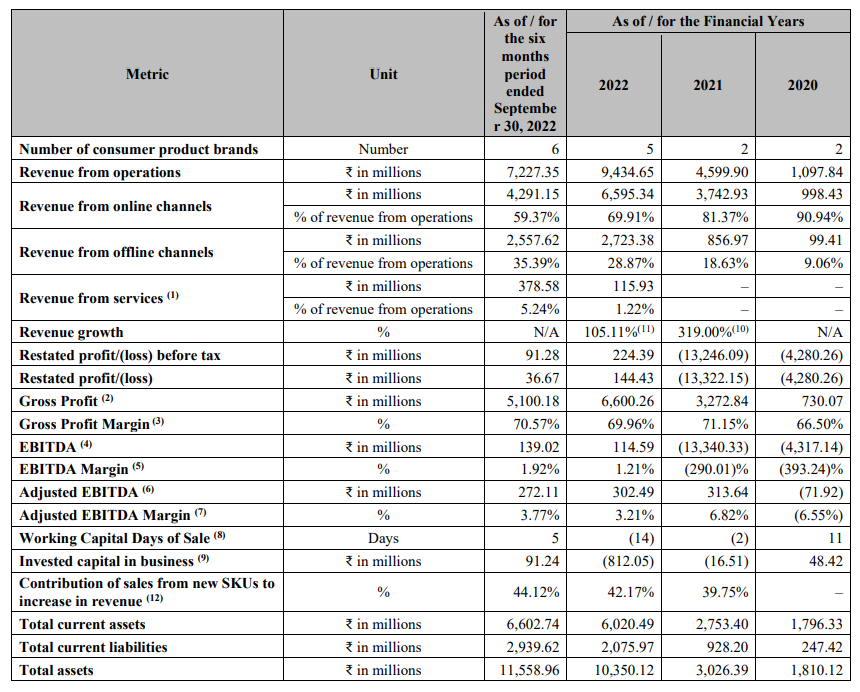
“We introduced 159 and 225 new SKUs in the BPC market in India during Financial Year 2022 and during the six months period ended September 30, 2022, respectively, which contributed to a 42.17% and 44.12% absolute increase in revenue from operations during the period, respectively, as compared to the preceding corresponding period.”
Quote from DHRP Doc Page no – 155
Observations
New product launches help the company to boost revenue
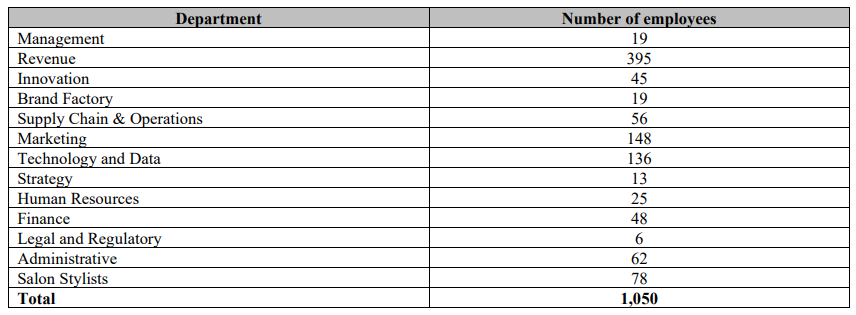
Mamaearth has a separate department for innovation with 45 members
Learnings
New-age BPC startups need to constantly innovate and launch based on market demands.aunch based on market demands.
Financials
Particulars
FH FY 2023
FY 2022
FY 2021
FY 2020
Sales
₹684
₹932
₹460
₹110
Marketing Spend
₹272
₹391
₹178
₹46
ROAS
₹2.5
₹2.4
₹2.6
₹2.4
P/L
₹9.21
₹22.4
₹(1324)
₹(428)
*Figure are in Crores
Observations
Mamaearth is spending ₹1 for every ₹2.5 of sale.
40% of revenue is going towards marketing and is constant, which should have been improved.
Company had been focusing on growth andnot on profitability.
Learnings
Low returning customers – If the returning customers are high the advertising spend goes down in the long run which is not the case with Mamaearth.
Profitability – The company did not focus on profitability.
Key Performance Indicators
Observations
Launched multiple brands with different positioning and branding over the years.
Online is the biggest sales channel which is increasing rapidly YoY.
Revenue growth is fueled with funding which resulted in substantial losses.
Assets and liabilities have increased as they have launched new brands – Aqualogica, Ayuga and BBlunt in FY 2022.
Revenue from offline channels is also growing at 50% YoY and the revenue share is also increasing by 10% YoY.
Understand mamaearth marketing strategy to create a successful to reach the target audience. Get insights into their approach, tactics, and strategies to market their natural and toxin-free beauty products. Find out how you can use mama earth’s strategy to grow. Mamaearth’s emphasis on sustainability, packaging, and customer service has also contributed to its success in the highly competitive beauty and personal care market in India.
Learnings
Startups needs to focus on profitability.
If the company burn cash to acquire users for 2 years that is manageable but the focus should be on profits as by then users will understand the value of the products and repeat sales will help us lower marketing expenses which in turn increases profitability.
mamaearth is an innovative, leading-edge company revolutionizing how businesses market their products. mamaearth marketing strategy is comprehensive and helps to increase your brand’s visibility, reach more customers and grow your business. Discover how mamaearth can help you.
Marketing
“During the Financial Year 2022 and six months period ended September 30, 2022, we worked with 2,915 and 3,958 influencers, respectively, which included beauty, fashion and lifestyle bloggers, makeup artists and celebrities to generate content for ourBrands”
Quote from DHRP Doc Page no – 147
Observations
Marketing is led by Content and Influencers.
Businesses need to go aggressive on content.
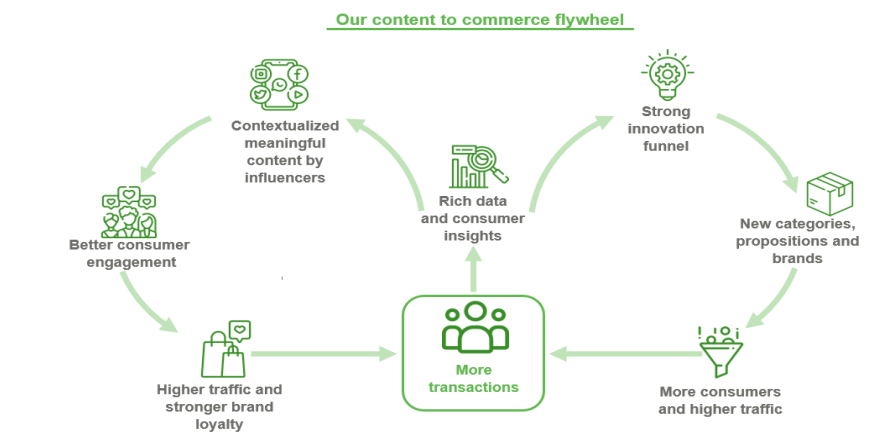
Growth Loops are more important than funnels for growth.
Learnings
BPC companies need to have a strong loyalty program to be coupled with great products in order to achieve growth.
Startups shall focus on Content and Influencer marketing.
The company was founded in 2016 and was acquired by Mamaearth in 2021
It’s a UGC platform with a community of 3.05 million active users a month in the first half of FY 2023. The vertical works as a content factory for all the sub-brands, which makes blogs, videos and other forms of content for all the platforms for all the sub-brands.
The community has a section called MyMoney where users can post content about the brand products and earn from their social media content. This helps the sub-brand develop awareness and consideration for all the products. The division acts as an in-house influencer marketing agency, keeping in mind influencer marketing is driving a major chunk of the revenue.
Observations
Mamaearth marketing strategy – is noted to make good use of influencer marketing and social media to build a strong brand identity and connect with their target market.
As marketing is content and influencer lead, Mamaearth has bought a platform which specializes in both aspects
UGC has a big impact in generating awareness and establishing credibility, which in turn helps drive revenue. This is the reason Mamaearth have bought the complete platform
Mamaearth has given a huge emphasis on content and this is reflected in its strategy.
This means people make decisions based on digital content.
Learnings
UGC will be a great marketing and content initiative.
Content – Companies shall focus on content created by the brand.
Resources Split
Observations
Innovation – The company focuses on the innovation of new products as they have dedicated 4.2% of the total workforce in innovation
Marketing – Mamaearth focus on marketing aggressively, this is evident based on their marketing budget and team size of 14.09%
Technology – Mamaearth gives importance to technology for all brands under their umbrella. This helps them in integrating and streamlining products, brands, supply chains, marketing, inventory, personalisation, data and many more aspects required for growth. They have 12.95% of the workforce dedicated to the technology department
Brand Factory – Brand is a critical part of Mamaearth’s growth, to maintain and grow the brand influence we can see they have 19 people in the brand team.
Strategy – Mamaearth has dedicated 13 people for strategy,
Having a dedicated team for strategy helps in company’s growth
Learnings
Innovation – Companies shall prioritize Innovation and dedicate a separate department to it in the long run.
Marketing – New-age startups will require strong marketing
They will be responsible for the company’s growth
Technology – Technology will help company grow and get streamlined.
Brand and Strategy – Brand and strategy will require separate teams in the long run. This will help the company to achieve scalability where they can focus on Pan India’s offline presence and a lot more
Technology
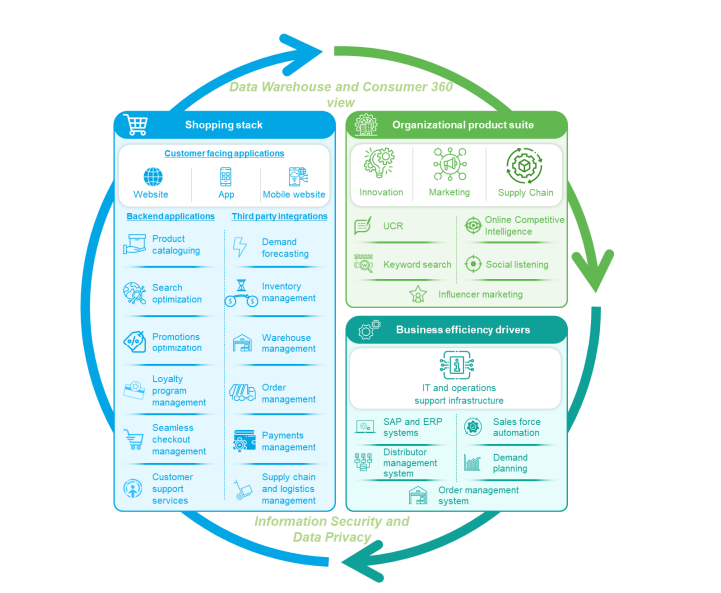
DRHP Page No. 158-159
Shopping Stack
1. Customer facing -Website is a must-have for BPC starts
Developing a mobile app is a good long-term goal
2. Backend -Companies need to focus on a loyalty program, promotion optimisation, website search optimisation and customer service in phases 2nd-3rd of their launch
3. Third-Party Integrations – Supply chain management will be a major challenge for the company which will be solved by advanced technology
Organizational Product suite
Innovation – This is what a startup should focus on and we also need to align ourselves with Innovative products based on demand
Company also need to learn and understand about business efficiency through process management and technology which will help them reduce cost and thus increase profitability
Data
Observations
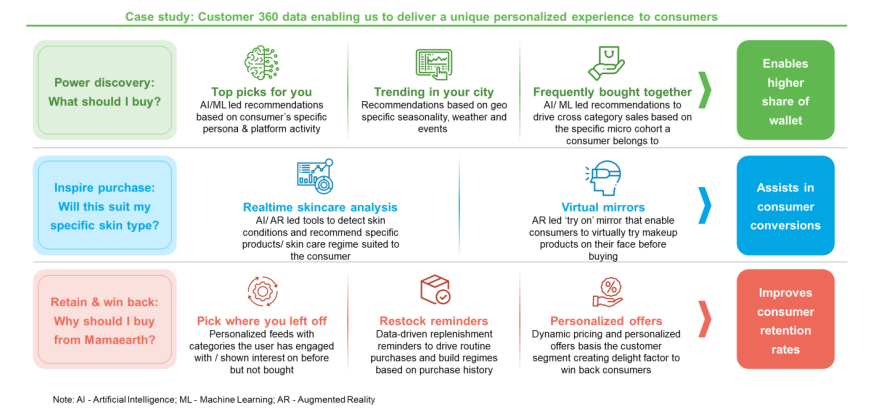
Recommendations based on user profiles, city, and combinations to increase average order value.
Tech is helping Mamaearth provide an experience which will ensure user stickiness and create a differentiator.
Personalisation is driving retention for Mamaearth.
Learnings
Startups should recommend products based on user profiles.
Futuristic tech will help BPC startups scale and create a differentiator, this can be implemented and used as a growth lever when the startup unlocks its future stages of growth.
Tech for personalisation can be implemented in 2nd phase of the launch, this will help companies in retaining users.
Strategic Learning
Sustainability
“Through our ‘Plant Goodness’ initiative, we plant trees for all orders placed on our direct-to-consumer channel and as on October 31, 2022, we had planted over 300,000 trees since inception. This initiative aims to reduce carbon footprint and improve air quality, soil quality and groundwater levels.
We are a plastic-positive organization, and have helped recycle 3,421 metric tonnes of plastic in Financial Years 2021 and 2022, which is more than the plastic used in products procured by us from contract manufacturers during the same period.”
Page 160
Learnings
The sustainability goal should be plastic-positive and carbon-neutral for being environmentally friendly.
Inhouse
Mamaearth is focusing on developing in-house capabilities in every segment except manufacturing.
Mamaearth has a sizable tech, marketing, finance, supply chain, innovation, brand, strategy, and human resource team.
Startup’s long-term goal shall be to build a strong independent department which works in sync with each other. BPC should also explore options for owning manufacturing.
Conclusion
Mamaearth gives us learnings on how to scale a BPC market, goals can be different for different companies some may focus on profitability and others on growth.
Overall, Mamaearth has disrupted the traditional beauty and personal care market in India by providing consumers with natural and safe alternatives, and has become a trusted brand for those who prioritize conscious and sustainable living.
Watch Key Lessons BPC Startups Can Learn from Mamaearth’s Growth Journey
For Curious Minds
Honasa Consumer Limited's 'house of brands' strategy is a deliberate approach to market segmentation, allowing it to address distinct customer needs without diluting its core brand identity. Instead of making Mamaearth a catch-all brand, Honasa launches or acquires new brands, each with a unique value proposition tailored to a specific consumer concern, effectively creating a portfolio that covers the BPC landscape. This multi-brand architecture is a powerful tool for market penetration and dominance. For example:
The Derma Co targets customers seeking science-backed, active ingredient solutions for skin conditions.
Aqualogica focuses on hydration for Indian skin types, a highly specific and large market segment.
Ayuga appeals to millennials interested in modern, easy-to-use Ayurvedic formulations.
This approach, which saw the acquisition of BBlunt in March 2022, allows the company to scale rapidly by speaking directly to the pain points of different consumer groups. Explore the full content to understand how this portfolio strategy builds a competitive moat.
Mamaearth anchors its brand identity in providing safe, natural, and effective beauty solutions, positioning itself as a trustworthy alternative in a market often criticized for chemical-laden products. This 'toxin-free' promise is not just a marketing tag but a foundational element of its product development, addressing the rising consumer demand for transparency and wellness. The success of this conscious consumption positioning is rooted in its ability to build trust and emotional connection with its target audience, particularly parents and millennials.
The brand effectively communicates this by highlighting specific natural ingredients, such as in its popular onion hair oil and vitamin C serum. This strategy was central to its growth since being established in 2016. By focusing on what is *not* in their products as much as what *is*, Mamaearth carved out a defensible niche that larger, legacy players found difficult to replicate authentically. Discover more about how this value proposition drives their entire marketing engine in the complete analysis.
Comparing these two approaches reveals a dual strategy for growth: organic innovation versus strategic acquisition. Launching a brand like The Derma Co in 2020 allows for precise targeting of an emerging need, in this case, science-backed skincare, giving Honasa complete control over brand narrative and product development from the ground up. This incubation model is ideal for capturing white space in the market.
On the other hand, acquiring an established brand like BBlunt provides immediate access to a loyal customer base, a proven product line, and a specific market segment, which in this case is professional at-home hair care. This acquisition model accelerates market share growth and category dominance. The key factor in choosing is the trade-off between speed and control, where launching offers control but takes time, while acquiring offers speed but requires significant capital and integration effort. The full article further explores how to weigh these factors for your own brand.
The success of Honasa's portfolio is clear evidence that its strategy of creating distinct brands for specific problems is highly effective. Instead of a generalized approach, each brand acts as a targeted solution. This problem-solution framework ensures products have an immediate and obvious relevance to consumers, which simplifies marketing and accelerates adoption. Since its founding in 2016, this has been a core tenet of the company's expansion.
Here are clear examples from their portfolio:
The Derma Co was established in 2020 specifically to provide solutions for skin and hair conditions using active ingredients, directly addressing consumers who research scientific formulations.
Aqualogica, launched in 2021, was designed to solve the problem of dehydration for Indian skin types, a niche but massive pain point.
Dr. Sheths was acquired to serve customers looking for products designed by dermatologists for Indian skin.
This focused approach minimizes customer confusion and builds brand authority within each vertical. Read on to see how this mapping is implemented across their entire marketing funnel.
The 2022 acquisitions of BBlunt and Dr. Sheths showcase a deliberate and aggressive strategy to achieve category leadership through acquisition rather than slower organic growth. This approach allows Honasa to instantly plug gaps in its portfolio and gain a strong foothold in established market segments. It is a classic market consolidation play, aimed at building an insurmountable portfolio of specialized brands.
The strategic rationale is clear: BBlunt provides immediate entry into the professional hair care and styling space, offering a 'salon-at-home' experience that complements Mamaearth's natural hair care line. Similarly, acquiring Dr. Sheths adds a dermatologist-formulated brand specifically for Indian skin, capturing a premium, high-trust segment of the market. These moves demonstrate a focus on buying existing brand equity and customer loyalty to accelerate the journey toward market domination. The full text offers more insight into their acquisition criteria and integration process.
Mamaearth's rapid ascent is directly tied to its pioneering use of influencer marketing as a primary channel for building trust and reaching its target audience. By collaborating with a wide spectrum of influencers, from micro-influencers to celebrities, the company created an authentic and relatable brand voice that resonated with millennial consumers. This community-led growth model allowed them to bypass the high costs and low trust associated with traditional advertising.
This strategy was effective because it leveraged the power of social proof at scale. Instead of just pushing products, Mamaearth used influencers to tell stories, share personal experiences, and educate consumers about its 'toxin-free' philosophy. This content-first approach built a loyal customer base and generated massive organic reach, creating a powerful engine for customer acquisition that was crucial for scaling to its IPO filing on December 29th, 2022. Dive deeper into the article to learn how they structured these influencer partnerships for maximum impact.
To replicate Mamaearth's success, a new BPC startup should focus on an authentic, content-driven approach rather than just direct advertising. This involves building a community around shared values, which Mamaearth achieved by emphasizing its 'natural and secure' product philosophy. An effective content-to-commerce pipeline can be built by following a clear, structured plan.
Here is a three-step implementation model:
Identify a Niche Pain Point: Just as The Derma Co focuses on 'active ingredients', define a very specific customer problem you solve. Create educational content (blogs, videos, social posts) that addresses this problem, establishing your brand as an expert.
Build a Multi-Tiered Influencer Program: Partner with a mix of nano and micro-influencers who genuinely align with your brand values. Equip them with products and creative freedom to generate authentic reviews and user-generated content, creating social proof.
Amplify and Repurpose Content: Systematically feature the best user and influencer content on your own channels, in ads, and on product pages. This validates your brand and creates a powerful feedback loop that drives both engagement and conversions.
Our full guide provides more detail on executing each of these steps effectively.
Mamaearth's success with its 'natural and secure' positioning is setting a new standard for the entire BPC industry, forcing competitors to adapt or risk becoming irrelevant. The long-term implication is a market-wide shift toward cleaner formulations, greater ingredient transparency, and more authentic brand storytelling. This paradigm shift towards conscious beauty raises the bar for both new entrants and incumbent legacy brands.
In the future, brands will no longer be able to compete solely on price or performance; they will also be judged on their ethical and environmental credentials. Companies like Honasa Consumer Limited, which have built their entire model on this foundation since 2016, will have a significant first-mover advantage and a more resilient brand equity. Competitors will be forced to invest heavily in R&D for natural alternatives and overhaul their marketing to build genuine trust. The article explores how this trend will shape product innovation and brand loyalty over the next decade.
Mamaearth successfully mitigated high acquisition costs by building a powerful organic growth engine centered on content and community, a stark contrast to brands that rely heavily on paid performance marketing. This strategy focuses on building trust and attracting customers rather than just buying them. By prioritizing inbound marketing and social proof, they created a more sustainable and cost-effective acquisition model, even if it supported a strategy of heavy losses for market share gain.
Instead of just running ads, Mamaearth invested in:
Educational Content: Addressing customer pain points with informative blogs and videos.
Influencer Seeding: Generating authentic testimonials and user-generated content at scale.
Community Building: Creating a loyal following on social media that advocates for the brand.
This approach created a flywheel effect where happy customers and influential voices became their most effective sales force. The full article breaks down how this model allowed them to scale aggressively from their 2016 launch.
Honasa Consumer Limited avoids the pitfall of brand dilution by assigning one core purpose to each brand in its portfolio, ensuring customers are never confused about what a brand stands for. This disciplined brand architecture strategy prevents the primary Mamaearth brand from being stretched too thin trying to be everything to everyone. It allows for focused marketing, product development, and clear communication.
This solution works by creating distinct identities for different market needs:
Mamaearth remains the go-to for 'toxin-free' and 'natural' products.
The Derma Co is exclusively for 'science-backed' solutions with active ingredients.
Ayuga is positioned for 'Ayurvedic' beauty in modern formats.
By keeping these value propositions separate, Honasa builds strong, memorable brands that own a specific mental space in the consumer's mind. Discover more about how this clear positioning drives their entire growth model in the full piece.
To ensure strong product-market fit, a new BPC brand should adopt a systematic process of mapping customer pain points before any product is developed, much like the strategy employed by The Derma Co. This involves moving beyond broad market trends to understand the specific, unmet needs of a target audience. An effective customer-centric product development process is key to launching successful products.
Here's a stepwise plan to implement this:
Identify Target Audience & Data Sources: Define your ideal customer and gather insights from online forums, social media comments, search query data, and competitor reviews.
Categorize Pain Points: Group the collected feedback into specific problems, such as 'acne scars', 'uneven skin tone', or 'dry, sensitive scalp'.
Map Problems to Ingredient-Based Solutions: Research and identify active ingredients or natural extracts that are scientifically proven to solve these specific problems.
Validate with a Test Group: Before a full-scale launch, create product samples and share them with a small group from your target audience for feedback.
This structured approach, used since their 2020 launch, ensures you are creating solutions, not just products. The article elaborates on tools to use for each step.
Choosing between a science-backed or an Ayurvedic proposition involves a trade-off between appealing to consumer trust in clinical results versus trust in traditional wisdom. A science-backed brand like The Derma Co targets consumers who are informed about active ingredients and seek proven efficacy, building credibility through data and transparency. An Ayurvedic brand like Ayuga, launched in December 2021, connects with those who value heritage and natural wellness, building credibility through authenticity and cultural relevance.
The decision hinges on your target audience's core beliefs and your brand's authentic story. A science-first approach requires investment in R&D and clinical testing, while a tradition-first approach requires deep knowledge of ancient practices and sourcing high-quality natural ingredients. Founders should weigh their own expertise and the specific market gap they aim to fill, as both can be highly successful if executed authentically. Read the full analysis to see how Honasa manages both within its portfolio.
Focused on providing measurable results with minimal effort, Adarsh is a growth expert, constantly next-levelling his expertise. He is an experienced and trusted asset with extreme analytics skills.
Analysis for strategizing to hit an all-time high and keeping track of the growth. Targeting long-term growth jo returns rukne na de.

 Growth Strategy and Planning