Contributors:
Amol Ghemud Published: October 16, 2025
Summary
What: A comprehensive guide highlighting common e-commerce SEO mistakes that can hinder visibility, traffic, and sales in 2025. Who: Online store owners, digital marketers, and SEO professionals looking to optimize performance and stay ahead of evolving search trends. Why: With advanced search algorithms and changing user behaviors, avoiding issues like poor mobile optimization, duplicate content, and slow loading speeds is vital for sustained growth. How: By implementing actionable fixes, improving technical SEO, and continuously optimizing site performance to maintain competitiveness and organic reach.
In This Article
Share On:
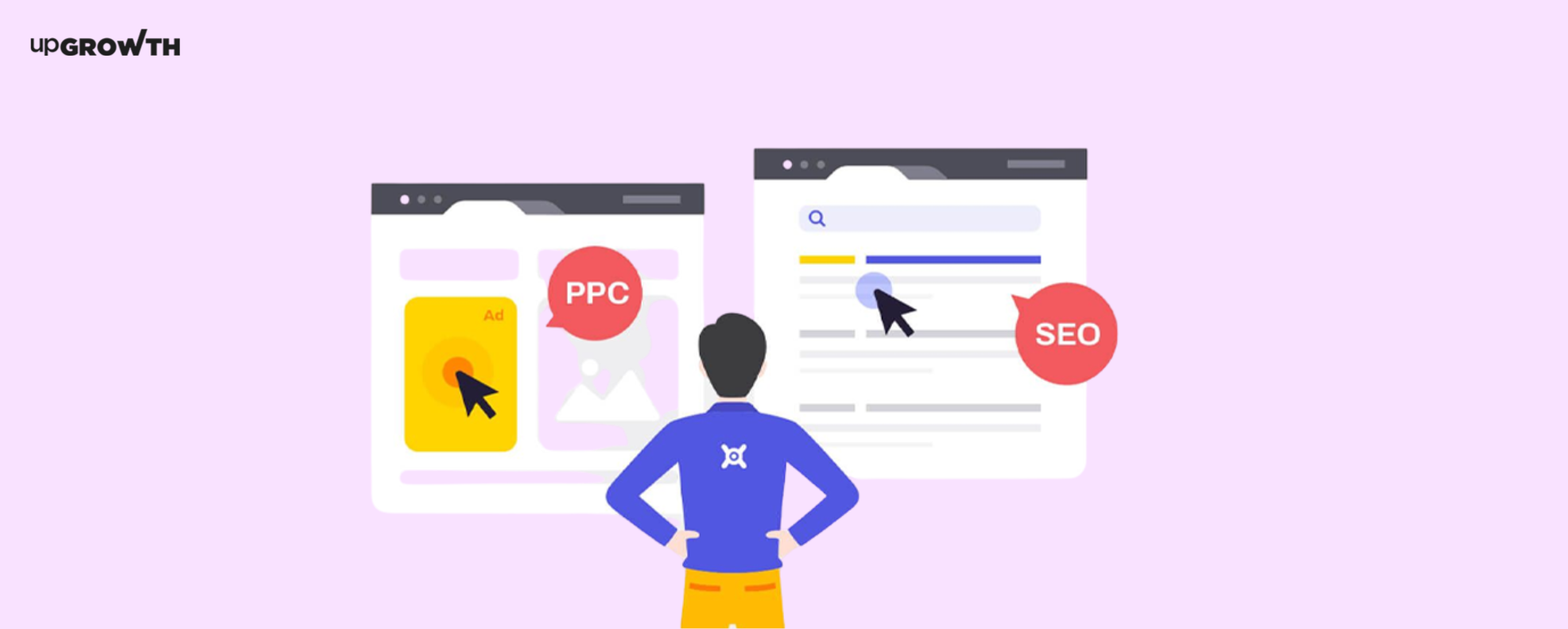
Don’t choose between SEO vs PPC—combine their strengths for a powerful, ROI-driven digital marketing strategy.
In the competitive world of e-commerce, driving traffic to your website is crucial for success. However, the debate between SEO (Search Engine Optimization) and PPC (Pay-Per-Click) continues as businesses strive to achieve the best return on investment (ROI). According to a study, 53% of website traffic comes from organic search, while paid search ads drive 27%. This blog explores both strategies’ advantages, challenges, and ROI potential to help determine which suits your e-commerce business better.
What is SEO for E-commerce?
Search Engine Optimization (SEO) involves organically optimising your website to rank higher in search engine results pages (SERPs). It’s a long-term strategy focusing on creating quality content, enhancing site structure, and earning backlinks to drive unpaid traffic.
Key Benefits of SEO for E-commerce
Cost-Effective Long-Term StrategyWhile initial investments in content and technical SEO can be high, the ongoing costs are minimal. Once your site ranks, it can attract traffic without additional expenditure.
Builds Trust and CredibilityConsumers tend to trust organic search results more than paid ads, making SEO a valuable asset for brand building.
Sustainable Traffic GrowthSEO ensures consistent traffic flow, even after campaigns end. This makes it ideal for businesses focusing on long-term growth.
Challenges of SEO
Algorithm dependency: Search engine updates can impact rankings, requiring regular monitoring and adaptation.
Results take time: SEO can take 3–6 months to show tangible results.
What is PPC for E-commerce?
Pay-per-click (PPC) is a paid advertising model in which businesses bid on keywords to display their ads on search engines and other platforms. With PPC, you pay a fee each time someone clicks on your ad.
Key Benefits of PPC for E-commerce
Instant ResultsPPC ads drive traffic almost immediately after the campaign goes live, making it ideal for product launches or seasonal promotions.
Precise TargetingPPC allows businesses to target specific demographics, locations, and devices, ensuring the right audience sees your ads.
Measurable ResultsWith detailed metrics such as click-through rates (CTR) and conversion rates, PPC provides clear insights into campaign performance.
Challenges of PPC
High Costs: With increasing competition, the average cost-per-click (CPC) can be expensive, especially for popular e-commerce keywords.
Temporary Traffic: Traffic stops after the campaign ends, making PPC less sustainable than SEO.
SEO PPC Unified Growth Strategy
Page 1 / –
StartSlide ControlFinish
Comparing SEO and PPC for ROI
1. Cost-Effectiveness
SEO: Requires an upfront investment but incurs minimal ongoing costs. Over time, the ROI improves as rankings stabilise.
PPC: Costs are consistent, and ROI depends on optimising ad spend and conversions. Long-term campaigns can become expensive.
2. Time taken to achieve Results
SEO: Best for long-term strategies as it can take months to yield results. Once established, traffic is consistent and cost-free.
PPC: Offers immediate results, making it suitable for businesses needing quick traffic and sales.
3. Conversion Rates
SEO: Organic traffic conversion rates are generally high, as users trust organic listings more than paid ads.
PPC: Can achieve high conversion rates through precise targeting but requires continuous optimisation.
4. Scalability
SEO: Scaling SEO requires more content and technical optimisation, which can take time and resources.
PPC: Easily scalable by increasing ad budgets, though higher spending doesn’t always guarantee better results.
5. Trust and Credibility
SEO: Builds brand trust as organic listings are perceived as more authentic.
PPC: While effective, users sometimes view PPC ads as less credible.
SEO vs. PPC: Which Strategy Fits Your Goals?
Choose SEO If:
Your e-commerce business aims for long-term growth.
You want to build brand credibility and trust.
You’re working with a limited budget for ongoing campaigns.
Choose PPC If:
You need quick visibility and results for a new product launch or sale.
Your budget allows for sustained ad spending.
You want to target a specific audience with precision.
By understanding each strategy’s strengths and challenges, you can align your marketing efforts with your business goals. Combining SEO and PPC often yields the best ROI, with PPC driving immediate results and SEO supporting long-term growth.
Combining SEO and PPC for Maximum Digital Marketing Impact
Integrating SEO and PPC strategies can create a powerful synergy, amplifying the effectiveness of your digital marketing efforts. Instead of viewing SEO and PPC as standalone tactics, businesses should embrace their combined potential to enhance visibility, refine targeting, and drive a more efficient sales pipeline.
Enhanced Funnel Efficiency and Pipeline Growth
A cohesive SEO and PPC strategy ensures a seamless marketing funnel. SEO attracts top-of-the-funnel users by providing educational and informative content and building awareness and interest. On the other hand, PPC focuses on bottom-of-the-funnel prospects, targeting high-intent keywords to convert users who are ready to make a purchase decision. This integrated approach creates a steady flow of leads through the funnel, resulting in pipeline growth and measurable revenue increases.
Optimised Customer Acquisition Cost (CAC)
Balancing PPC and SEO allows businesses to optimise their overall CAC. While SEO generates organic traffic at a lower cost over time, PPC delivers immediate results by targeting specific, conversion-driven keywords. Together, these strategies complement each other—PPC provides quick wins, and SEO builds sustainable, long-term traffic—leading to reduced acquisition costs and maximised profitability.
Increased Customer Lifetime Value (LTV)
Aligning SEO and PPC creates a unified customer journey, fostering trust and loyalty. By offering consistent messaging and a seamless experience across touchpoints, brands can enhance customer satisfaction. This approach often results in higher LTV, as customers nurtured through this strategy are more likely to become repeat buyers and brand advocates.
Data Synergy for Superior Targeting
Data sharing between SEO and PPC unlocks new opportunities for campaign refinement. Insights from PPC campaigns, such as high-performing keywords and ad creatives, can inform SEO strategies, leading to better-optimised content. Conversely, top-performing organic content can inspire PPC ad copy and targeting parameters—this data synergy results in better-targeted campaigns, improved conversion rates, and more significant ROI.
Maximising ROI Across Channels
An integrated approach allows businesses to allocate budgets strategically based on the performance of each channel. By analysing SEO and PPC’s ROI, companies can determine the best strategy for specific objectives—brand awareness, lead generation, or direct sales. This ensures that every marketing dollar contributes to revenue growth.
Rethinking the Strategy: From SEO vs. PPC to SEO + PPC
The interplay between SEO and PPC proves the traditional “either/or” mindset is outdated. By combining these strategies, businesses unlock unparalleled opportunities to enhance their marketing performance. It’s time to shift the narrative from “SEO versus PPC” to a unified “SEO and PPC” approach, harnessing their synergy to deliver optimal results.
Comparison of SEO and PPC Marketing Metrics and Outcomes
Marketing Channel
Metric Name
Value
SEO (Organic)
Cost Per Acquisition (CPA)
R127.18, £0.10, and R25.85
PPC (Paid)
Cost Per Acquisition (CPA)
R333.43, £14.92, and R112.96
SEO (Organic)
Lead Volume Increase
21%
PPC (Paid)
Lead Volume Increase
170%
PPC (Paid)
Cost Per Acquisition (CPA) Reduction
30%
PPC (Paid)
Conversion Rate
1.95% to 6.16%
SEO (Organic)
ROI (Estimated)
500% to 1,300%
PPC (Paid)
ROI (Estimated)
200%
SEO (Organic)
ROAS (Average)
9.10
PPC (Paid)
ROAS (Average)
1.55
SEO (Organic)
Traffic Share
53%
PPC (Paid)
Traffic Share
27%
PPC (Paid)
Ad Spend Reduction (via SEO)
Up to 45%
In Conclusion
Choosing between SEO and PPC isn’t an either-or decision—it depends on your business goals, budget, and timeline. SEO delivers sustainable, long-term growth, building trust and lowering costs over time, while PPC offers immediate results with precise targeting, albeit at a higher upfront investment. By combining the strengths of both strategies, businesses can achieve a well-rounded approach that maximises ROI. For customised strategies to elevate your e-commerce success, partnering with experts like upGrowth can make all the difference.
Key Takeaways
SEO Builds Long-Term Value: Focuses on sustainable traffic, brand credibility, and trust, making it cost-effective over time.
PPC Drives Instant Results: Offers quick traffic and targeted visibility for product launches and seasonal campaigns but incurs ongoing costs.
Combined Strategies Maximise ROI: Leveraging both SEO and PPC enhances visibility, reduces acquisition costs, and creates a unified customer journey.
Data Sharing is Key: Insights from SEO and PPC can refine targeting and content strategies, improving conversion rates across channels.
SEO vs. PPC: E-commerce ROI Showdown
Which Channel Delivers Better Long-Term Results?
Comparison Metric
SEO (Organic)
PPC (Paid)
Speed to Visibility
Slow (3-6+ Months)
Immediate (Instant)
Cost Structure
High Initial Investment (Content/Tech), Low Marginal Cost per Click
Immediate & Continuous Cost per Click (CPC)
Scalability & Growth
Exponential (Traffic builds on itself)
Linear (Traffic scales with budget)
Traffic Sustainability
Persistent (Traffic remains after investment stops)
Volatile (Traffic stops immediately if budget runs out)
Long-Term ROI
Generally Higher (Asset Creation)
Immediate & Measurable (Relies on campaign efficiency)
The article concludes that **SEO yields better long-term ROI** for e-commerce by building a compounding digital asset (authority, content) that continuously attracts high-quality, non-paid traffic. PPC is essential for immediate results, testing, and filling short-term traffic gaps.
FAQs
1. What are the key differences between SEO and PPC for e-commerce? SEO enhances organic rankings to generate free, long-term traffic, while PPC offers immediate visibility by paying for ad placements. SEO builds trust over time, whereas PPC provides instant results but requires continuous investment.
2. How does SEO help drive organic traffic to an e-commerce website? SEO boosts website visibility in search engine results by using optimised content and targeted keywords. This attracts users actively searching for related products, leading to consistent and sustainable organic traffic growth.
3. What are the benefits of PPC advertising for e-commerce brands? PPC offers instant visibility, precise targeting, and measurable results, allowing brands to attract potential customers quickly. It’s particularly useful for time-sensitive campaigns and effectively capturing high-intent audiences.
4. How do the costs of SEO compare to PPC in the long run? SEO involves an upfront investment with lower ongoing costs, offering a sustainable return over time. PPC requires constant ad spend, often resulting in higher cumulative costs as campaigns continue.
5. Which strategy delivers faster results for e-commerce businesses, SEO or PPC? PPC delivers immediate results through paid ads that appear at the top of search results, which is ideal for quick visibility. In contrast, SEO is a long-term strategy that builds rankings and traffic gradually over time.
6. How does the ROI of SEO evolve for e-commerce sites? SEO’s ROI improves as the site gains authority and ranks higher, driving consistent organic traffic without ongoing ad costs. Over time, it becomes a cost-effective channel for sustained e-commerce growth.
7. What factors influence the ROI of PPC campaigns in e-commerce? ROI depends on effective keyword selection, ad quality, targeting precision, and competitive bidding. Strateg
For Curious Minds
SEO is a strategic investment in your brand’s digital foundation, designed to build authority and attract consistent traffic without ongoing media spend. Its value compounds over time, making it a powerful asset for sustainable growth. Since organic search drives 53% of website traffic, establishing a strong presence is essential for long-term visibility. For an e-commerce business, this involves a multi-faceted approach:
Technical Optimization: Ensuring your site structure is clean, fast, and mobile-friendly creates a better user experience that search engines reward.
Content Creation: Developing high-quality product descriptions, guides, and blog posts that answer user queries establishes your site as a trusted resource.
Backlink Building: Earning links from reputable sites signals to search engines that your brand is credible.
This sustained effort builds brand equity, as consumers inherently trust organic results more than advertisements. Explore the full article to learn how to integrate this long-term vision into your strategy.
PPC is an advertising model where your e-commerce business pays a fee each time a user clicks on one of your ads, providing immediate traffic. Its primary value lies in its precision, allowing you to connect with specific customer segments at the exact moment they are ready to buy. Considering paid search ads drive 27% of website traffic, this channel is perfect for time-sensitive initiatives. A successful e-commerce PPC campaign allows you to:
Target Demographics: Focus your ad spend on users based on age, location, income, and interests to maximize relevance.
Control Timing: Schedule ads to run during peak shopping hours or for the duration of a specific promotion.
Measure Instantly: Track metrics like click-through rates and conversions from the moment a campaign launches.
This level of control ensures your budget is spent efficiently on high-intent audiences, making it ideal for generating quick returns. Learn more about optimizing PPC campaigns by reading the complete analysis.
When launching a new product, the choice between SEO and PPC hinges on balancing immediate needs with long-term goals. PPC provides instant visibility crucial for initial sales, while SEO builds the sustainable traffic foundation required for enduring success. A practical evaluation involves weighing speed against cost and longevity. For example, a new online store could use PPC to capture a portion of the 27% of traffic from paid ads to test product-market fit quickly. Key trade-offs include:
Speed vs. Sustainability: PPC delivers traffic on day one, but it stops the moment you stop paying. SEO takes months to mature but provides a continuous stream of visitors once rankings are achieved.
Cost Control vs. Compounding Value: PPC requires a consistent budget. SEO demands an upfront investment that pays dividends through 'free' traffic over time.
Targeting Precision vs. Broad Reach: PPC allows for hyper-specific targeting, while SEO captures a wider audience actively searching for solutions.
The most effective strategy often combines both, using PPC for the launch spike and SEO for building the brand. Discover how to create a hybrid model by reading the complete analysis.
Neither SEO nor PPC is universally superior for ROI; the better choice depends on your business's timeline and financial structure. SEO typically offers a higher long-term ROI because once rankings are established, traffic is generated at no direct cost per click. In contrast, PPC provides a more immediate and measurable ROI but requires continuous investment to maintain traffic. For a growing e-commerce business, the analysis should focus on cash flow and growth objectives. An integrated approach often yields the best overall return. For instance, you could use PPC to drive initial sales and gather keyword data that informs and accelerates your SEO strategy, which is designed to capture the 53% of traffic from organic search. The long-term financial viability of each depends on your ability to manage its specific challenges: for PPC, it is optimizing ad spend against rising CPCs, and for SEO, it is the patience and resource allocation required to see results. Read our deep dive to see financial models for both strategies.
Successful e-commerce companies capture the majority organic traffic share by focusing on creating a trustworthy and authoritative online presence. They understand that ranking high is not just a technical exercise but a brand-building one. These businesses move beyond basic keyword stuffing and instead invest in a holistic user experience that search engines reward. For example, a leading online retailer might build out comprehensive buying guides, detailed product comparisons, and user-generated reviews. Key strategies include:
Topical Authority: Creating clusters of content around core product categories to demonstrate expertise.
Technical Excellence: Ensuring fast page load speeds, mobile-first design, and a secure checkout process to build user trust.
Authentic Backlinks: Earning links from industry blogs and publications, which act as third-party endorsements of their credibility.
This approach secures consistent, cost-effective traffic and establishes the brand as a reliable resource in its niche. Explore more proven examples in the full article.
Fast-growing e-commerce businesses use PPC for more than just immediate sales; they treat it as a strategic market intelligence tool. This approach allows them to quickly validate ideas and gather actionable data before committing to larger investments. For example, an online apparel store can use PPC to test consumer response to a new fashion line in specific geographic markets. By launching a targeted campaign, they can instantly measure metrics like click-through rates and conversion rates to gauge interest. This agile methodology offers several benefits:
Keyword Discovery: PPC campaigns reveal which search terms convert best, providing valuable data that can be used to inform and prioritize SEO efforts.
A/B Testing: Businesses can test different ad copy, pricing points, and landing page designs to see what resonates most with their target audience.
Audience Insights: The demographic and behavioral data from PPC platforms help refine customer personas for all marketing channels.
This makes PPC a powerful and versatile tool for de-risking new initiatives and accelerating growth. Uncover more ways to use PPC strategically in our detailed guide.
An integrated plan for a new e-commerce startup should use PPC to generate immediate cash flow while simultaneously building a long-term SEO foundation. This dual approach ensures the business survives its initial months and thrives in the long run. The goal is to create a symbiotic relationship where insights from one channel fuel the other. Here is a practical, phased plan:
Phase 1 (Months 1-3): Launch targeted PPC campaigns focusing on high-intent, long-tail keywords to drive initial sales and gather conversion data. At the same time, conduct a full technical SEO audit and begin creating foundational content for key product categories.
Phase 2 (Months 4-6): Analyze PPC data to identify the most profitable keywords and use them to refine your SEO content strategy. Scale back PPC spend on terms where you begin to rank organically, reallocating the budget to test new keywords or markets.
Phase 3 (Months 7+): As organic traffic from SEO starts to build, use PPC more strategically for promotions, retargeting, and capturing top-of-funnel audiences.
This method ensures you are not overly reliant on a single channel. Learn how to budget for this integrated strategy in the full post.
Scaling SEO and PPC presents different challenges and requires distinct resource allocation. Scaling PPC is often faster but can lead to diminishing returns, while scaling SEO is slower but builds a more permanent asset. Understanding these differences is key to effective expansion. Scaling PPC typically means increasing the ad budget, expanding keyword lists, and targeting new platforms or demographics. The primary roadblocks are rising ad costs and maintaining a positive ROI at a higher spend. In contrast, scaling SEO involves a significant investment in content production, technical enhancements, and outreach for backlinks. The main challenge is the time it takes to see results, as it can be 3-6 months before new content ranks. A smart scaling strategy uses profits from PPC to fund the slower, more asset-driven growth of SEO, which aims to capture the large 53% organic traffic share. Read our complete guide to learn about building a team to scale both channels.
To future-proof SEO strategies against algorithm updates, e-commerce marketers must shift from chasing ranking factors to focusing on user intent and creating genuine brand authority. Search engines are increasingly prioritizing websites that offer the best and most trustworthy user experience. This means your strategy should be less about technical tricks and more about becoming the definitive resource in your niche. Looking ahead, key adjustments include:
Focus on Topical Authority: Instead of optimizing for single keywords, build comprehensive content hubs that cover a topic in its entirety, signaling deep expertise.
Prioritize Technical User Experience: Double down on site speed, mobile usability, and security, as these are foundational elements of user trust.
Embrace Multiformat Content: Integrate video, interactive tools, and high-quality imagery to engage users and increase time on site.
By building a brand that users and search engines love, your e-commerce site will be more resilient to algorithm shifts. Discover more future-focused SEO tactics in the full article.
The most common mistake is becoming entirely dependent on paid traffic, which creates a fragile business model vulnerable to rising ad costs and competitive pressures. This 'PPC addiction' means traffic and sales stop the moment you turn off your ad spend. Integrating SEO builds a resilient and cost-effective marketing foundation that acts as a valuable business asset. By developing strong organic rankings, your business can capture a share of the 53% of traffic from organic search, which is not directly tied to your daily advertising budget. This diversification offers a powerful defense: if a competitor outbids you on PPC, your organic presence ensures you remain visible to customers. SEO also builds long-term trust and credibility that paid ads cannot replicate, creating a more defensible market position. The combination of paid and organic strategies provides stability and a lower overall customer acquisition cost over time. Learn how to balance your marketing portfolio by reading on.
The ideal solution for bridging the initial SEO traffic gap is to strategically use PPC advertising. This creates a two-pronged approach where PPC delivers immediate traffic and sales, providing the revenue and data needed to sustain the business while the long-term SEO efforts mature. This is not about choosing one over the other, but about using each channel's strengths to compensate for the other's weaknesses. For instance, an e-commerce store can use PPC campaigns to test which keywords convert best, then apply those insights to prioritize their SEO content creation. This makes the eventual SEO efforts more effective. Patience is critical because SEO is a marathon, not a sprint; it involves building real authority and trust, which cannot be rushed. Short-term thinking leads to abandoning SEO too early, forfeiting the opportunity to capture a share of the 53% of traffic from organic search and build a truly sustainable business asset. Find out how to structure this bridging strategy in the full analysis.
To combat rising CPCs, e-commerce businesses must shift from a volume-based to a value-based PPC strategy. This means focusing on efficiency and maximizing the return from every click rather than simply trying to outbid competitors. The key is to improve ad relevance and post-click experience to increase conversion rates, which naturally improves ROI without raising spend. Smart adaptations include:
Focus on Long-Tail Keywords: Target more specific, lower-competition phrases that indicate higher purchase intent.
Optimize Landing Pages: Ensure the page a user lands on perfectly matches the ad's promise, providing a smooth path to conversion.
Leverage Retargeting: Re-engage users who have visited your site but did not purchase, as this audience is often cheaper to convert.
Refine Audience Targeting: Use demographic, in-market, and custom intent audiences to show ads only to the most qualified buyers.
This data-driven approach ensures your ad budget works harder, protecting your ROI even in a competitive market. Explore advanced optimization techniques in the full article.
Amol has helped catalyse business growth with his strategic & data-driven methodologies. With a decade of experience in the field of marketing, he has donned multiple hats, from channel optimization, data analytics and creative brand positioning to growth engineering and sales.

 Growth Strategy and Planning